A cat that meows at night is not trying to ruin your sleep on purpose. Night-time vocalizing usually has a reason, even if it is not obvious at first. The cause may be hunger, boredom, stress, habit, age-related changes, or a medical issue.
Your cat may be hungry or expecting attention
Some cats learn that meowing brings food, play, or attention. If the pattern repeats, night-time noise can become a habit.
A consistent feeding routine and an evening play session can help. Active play before bedtime followed by a meal often supports a calmer night.
Boredom and unused energy
Indoor cats need stimulation. If a cat sleeps all day and has little play or enrichment, they may become active just when the house gets quiet.
Try adding climbing space, puzzle feeders, window perches, and short interactive play sessions during the day. A tired cat is more likely to rest at night.
Stress or changes at home
Moving furniture, a new pet, visitors, construction noise, or changes in routine can make some cats vocalize more. Cats feel safest when daily life is predictable.
Keep food, water, resting spots, and the litter area consistent. If your cat seems anxious, create a quiet safe area where they can retreat.
Could it be a health issue?
Sudden night-time meowing, especially in an older cat, should be taken seriously. Pain, thyroid disease, high blood pressure, cognitive changes, and urinary problems can all affect vocal behavior.
If the meowing is new, intense, or paired with appetite changes, weight changes, litter box changes, or restlessness, contact a veterinarian.
Do not overlook the litter box
Some cats vocalize when the litter box is dirty, difficult to access, or associated with discomfort. Keep the box clean and watch for frequent trips, straining, or accidents.
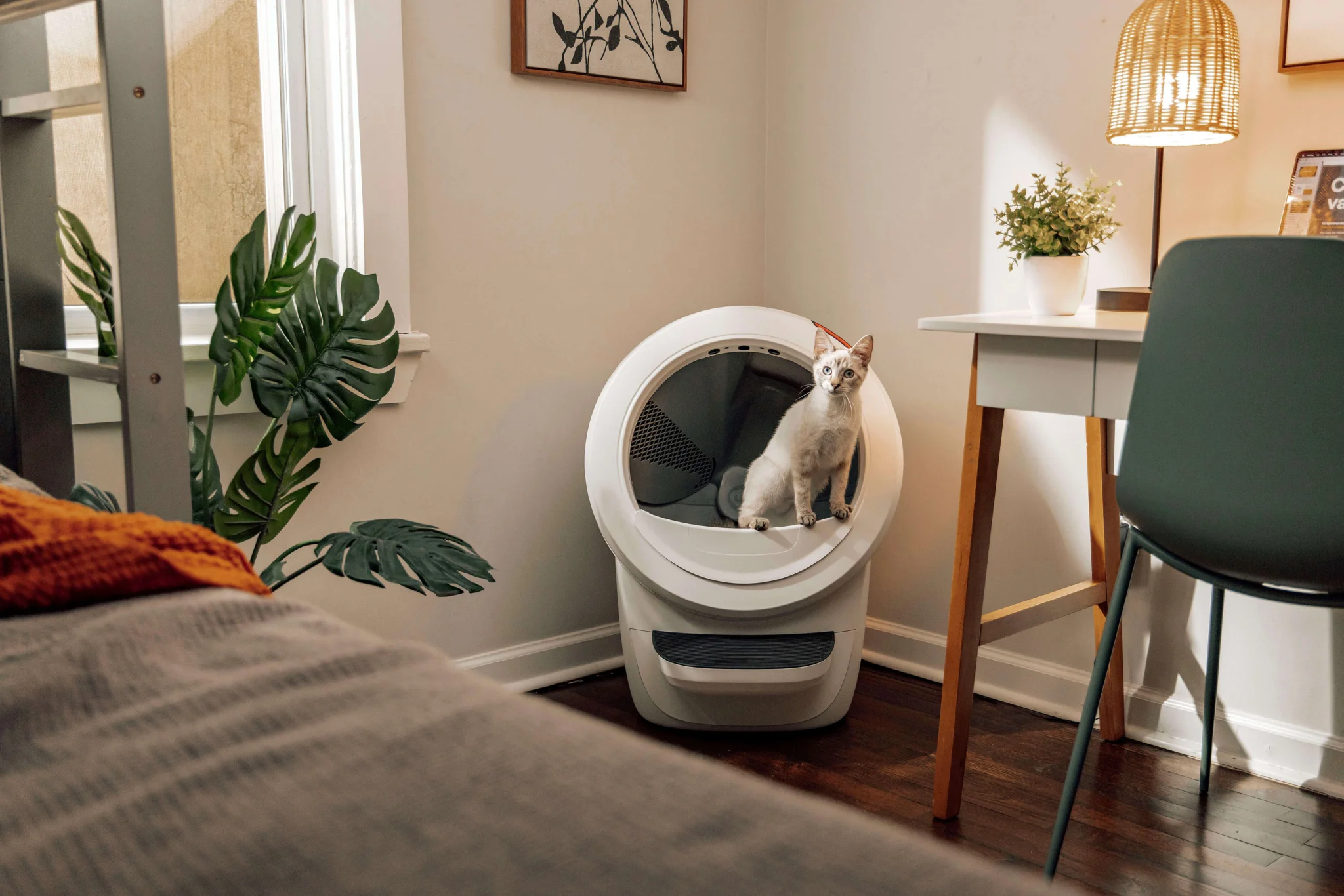
Litter-Robot helps keep the litter bed clean throughout the day and night, which can remove one common source of stress from a cat’s routine.